McLaughlin

Hugh McLaughlin, PhD, PE,

Video: Making Biochar with Jolly Roger Ovens

Douglas Clayton and Hugh McLaughlin

Hugh McLaughlin and I have been working on describing our retort over TLUD char maker, which Hugh has christened the Jolly Roger Oven or " J-RO". The current draft of our paper The “Jolly Roger Ovens” family of Biochar-making devices in pdf, and attached to this story

From the YouTube notes:
A 30 gallon retort heated by a 55 gallon TLUD is the basic idea. I've been a biochar enthusiast for 5 years now and riding the learning curve on how to make and use biochar at home. This device can run very cleanly. The cleanest I have seen for a simple batch device.

Playing with large, red hot, drums is a safety concern. So be thoughtful and careful if you try it. I am looking forward to making improvements to the design and looking forward to seeing anyone elses. This is an open architecture. If you come up with improvements, please share them.

How to make high and low adsorption biochars for small research studies

Hugh McLaughlin, PhD, PE, Alterna Biocarbon Inc.

As the world of biochar expands, the need for definitive research to answer core questions grows. One such question is “What is the role of adsorption and when does it make a pivotal difference in growing situations?” Answering those questions has been hampered by the historical absence of adsorption as a monitored property in soils and soil components (as compared to CEC) and the lack of a reliable method to create low and high adsorption biochars. While there is little that can be done about the former situation, the later may have a fairly facile solution, which will be presented here.

During studies of various TLUD stoves and investigating the pros and cons of Natural Draft (ND) versus Fan Assisted/Forced Air (FA), it was noticed that certain FA operating conditions yielded biochars with significantly higher adsorption capacity. Studies are continuing to pin down this phenomenon, but an early conclusion is that a simple modification of the existing 1G Toucan ( http://bioenergylists.org/en/mclauglintoucan ) will allow high adsorption biochars to be generated in half-gallon quantities. Since the traditional natural draft 1G Toucan, as originally detailed on the bioenergylists website in January 2010, generates biochars with low but significant adsorption capacity, a similar biochar with high adsorption appears to be easily achieved.

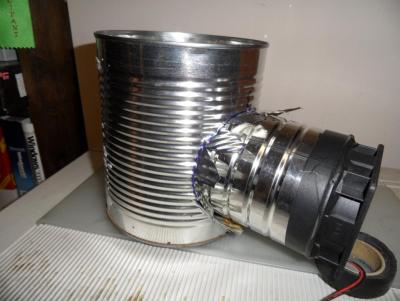
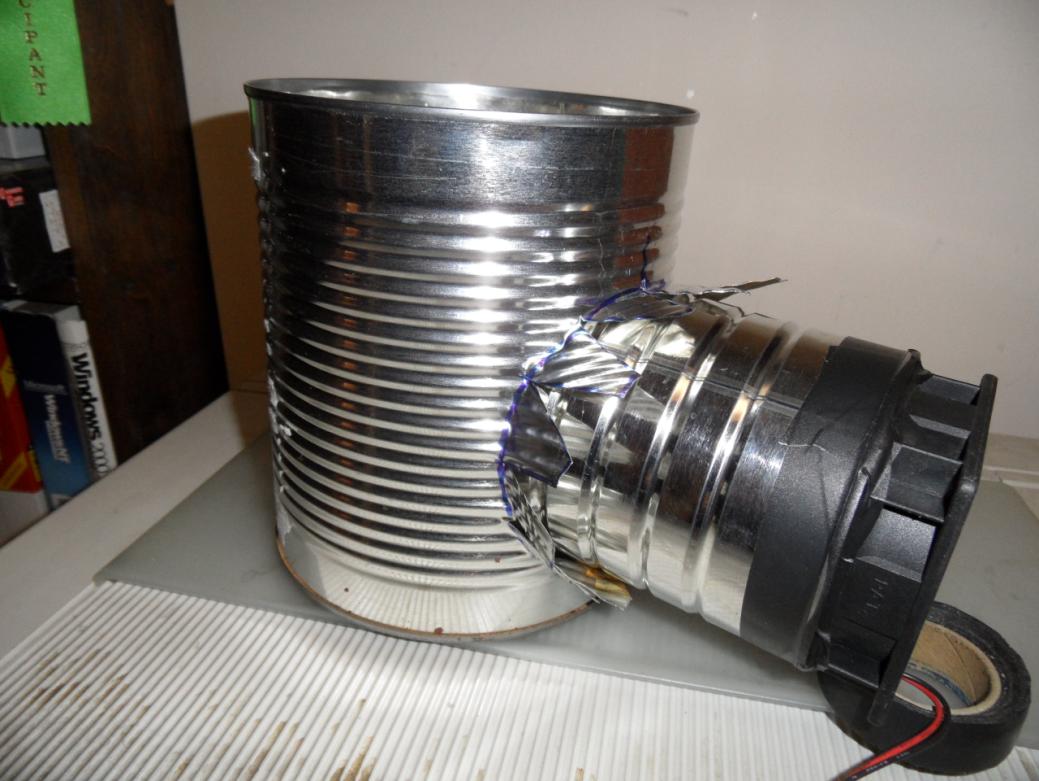
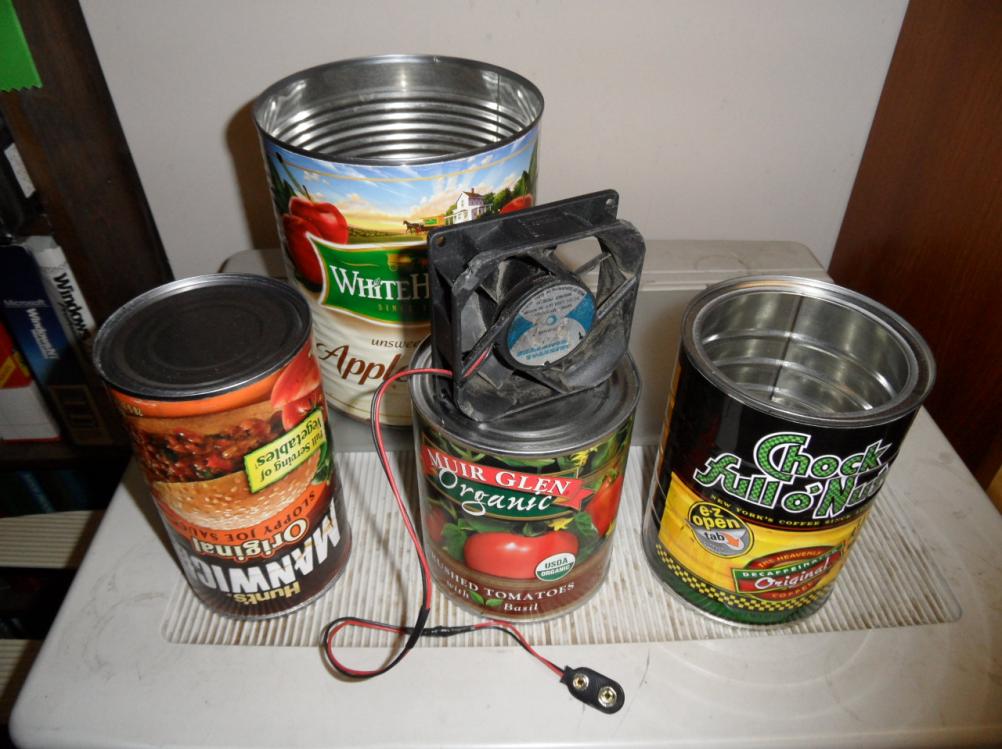
The key modification for high adsorption biochar is the addition of a fan assisted “Air Base”. The construction of the Air Base is detailed here. The starting point is the recycling center for some discarded tin cans – and one computer power supply fan, as shown in Figure 1.

Download the rest of the instructions in the attached PDF.

(Figure 1)

Caution! In Natural Draft Mode, the 1G Toucan typically has a flame that is up to one foot tall. In Forced Air mode, the flame is more like four feet tall.

We recommend that you make biochar outside, or in an open area with flame-retardant surfaces and a fire extinguisher or method of quenching the flame close to hand.

Biochar at Biomass DAy

John McLaughlin explaining Biochar at Biomass Day sponsored by The Vermont Wood Pellet Co

Video by Emily Peyton

Incorporating Biochar in Your Garden, Grow More Closer to Home

Hugh McLaughlin, July 2010

This is a nice series on growing your food "close to home" which also features Hugh Mclaughlin giving a nice presentation about making biochar and incorporating it into your garden.

Grow More Closer to Home, produced by Barry Hollister

For the complete list of shows, go to the Berkshire Harmonly YouTube page:
http://www.youtube.com/user/BerkshireHarmony

See the Making Biochar video here:
http://www.youtube.com/user/BerkshireHarmony#p/u/1/COPqvVH7jiw

Characterizing Biochars prior to Addition to Soils

Hugh McLaughlin, PhD, PE, Alterna Biocarbon Inc. , January 2010

Biochar is a vague term that applies to a potentially broad class of charcoal materials intended for addition to soils. Many raw materials and conversion processes can lay claim to producing biochar, and the resulting biochars will have different characteristics. The purpose of this discussion is to formulate a simple scheme for characterizing biochars before addition to soils. Efforts will be made to discuss the logic behind the individual characteristics, in addition to the limitations of the individual assays.

The presentation and content here is consistent with the paper titled

1G Toucan TLUD for Biochar Jan 2010

by Hugh McLaughlin, PhD, PE, Alterna Biocarbon Inc., January 2010 Version

Download the Instructions: 1G Toucan TLUD for Biochar Jan 2010 - final.pdf (630kb)

Controlled Adsorption 1gal Toucan Fig 3

Controlled Adsorption 1gal Toucan Fig 3

Controlled Adsorption !gal Toucan Fig 1

Controlled Adsorption !gal Toucan Fig 1
Syndicate content